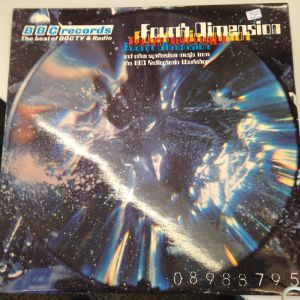
Vinila plates
BBC Radiophonic Workshop – "Fourth Dimension" (1973) Vinila plates, LP, Album, Stereo formātā. Oficiāls izdevums no BBC Records, izdots 1973. Šis izdevums būs interesants Electronic un Experimental mūzikas cienītājiem. Vinila plates pārdošanā — pieejama iegādei tiešsaistē.
BBC Radiophonic Workshop - Fourth Dimension 1973
BBC Radiophonic Workshop – "Fourth Dimension" (1973) Vinila plates, LP, Album, Stereo formātā. Oficiāls izdevums no BBC Records, izdots 1973. Šis izdevums būs interesants Electronic un Experimental mūzikas cienītājiem. Vinila plates pārdošanā — pieejama iegādei tiešsaistē.
Publicēt komentāru
 vinilaera
pirms 2 nedēļām
vinilaera
pirms 2 nedēļām
Rīga 
Izlaiduma informācija
Izdots:
1973
Izpildītājs: BBC Radiophonic Workshop
Žanri: Electronic
/ Stili: Experimental
Formāts: Vinila plates
(
LP, Album, Stereo )
Valsts: UK
Izdevniecība: RED 93 S
(BBC Records)
Ierakstu saraksts
| № | Title | Duration |
|---|---|---|
| A1 | Scene & Heard (Radio 1) | |
| A2 | Just Love (BBC TV) | |
| A3 | Vespucci | |
| A4 | Reg (BBC African Service) | |
| A5 | Tamariu (BBC TV) | |
| A6 | One-Eighty-One (Radio 4) | |
| B1 | Fourth Dimension (Radio 4) | |
| B2 | Colour Radio (BBC Radio Leeds) | |
| B3 | Take Another Look (Radio 4) | |
| B4 | Kaleidoscope (Radio 4) | |
| B5 | The Space Between (Radio 3) | |
| B6 | Flashback |
Informācija
Credits:Composed By, Performer [Realised By] – Paddy Kingsland
Design [Sleeve Design], Photography – Andrew Prewett
Producer – Desmond Briscoe
Notes:Music heard on radio and Television (including Test Card Transmissions).
One aspect of the work of the BBC Radiophonic Workshop is the composition and realisation of signature tunes and incidental music for BBC Radio and Television programmes. Programme producers come to the Workshop with varying requests - it must be 'bright', 'catchy', 'sinister', 'modest', 'supernatural', 'funny', and so on but, most important, it must be unique in terms of sound qualities.
The composer then sets to work to create the tune using natural sounds, which have been manipulated in some way and cut together on tape, or electronic sources, such as the voltage controlled synthesiser.
Several such signature tunes are included on this record, composed by Paddy Kingsland, who joined the creative staff of the Workshop in 1970. Before this, he worked as a tape editor, then studio manager, chiefly for Radio One. He is a firm believer that instrumental sound combined with electronic and treated sound is essential for this type of work. The tracks on this record include compositions for Radio 1, 3, 4, Local Radio and Television programmes.
The synthesisers used on this disc are both British, and both made by E.M.S. of London. They are the VCS3, an amazingly versatile miniature synthesiser, and its big brother, the Synthi '100', known within the Radiophonic Workshop as 'The Delaware', after the address of the Workshop. This machine incorporates a digital memory that can be programmed via a conventional keyboard, and can store 256 events on 3 layers in any one 'run'. In combination with the multi-track tape recorder, it provides all the facilities of an electronic music studio, its range being limited only by the imagination of the person using it.
The specially created stereo is not an attempt at realism, but is used as a sound object in its own right.
One aspect of the work of the BBC Radiophonic Workshop is the composition and realisation of signature tunes and incidental music for BBC Radio and Television programmes. Programme producers come to the Workshop with varying requests - it must be 'bright', 'catchy', 'sinister', 'modest', 'supernatural', 'funny', and so on but, most important, it must be unique in terms of sound qualities.
The composer then sets to work to create the tune using natural sounds, which have been manipulated in some way and cut together on tape, or electronic sources, such as the voltage controlled synthesiser.
Several such signature tunes are included on this record, composed by Paddy Kingsland, who joined the creative staff of the Workshop in 1970. Before this, he worked as a tape editor, then studio manager, chiefly for Radio One. He is a firm believer that instrumental sound combined with electronic and treated sound is essential for this type of work. The tracks on this record include compositions for Radio 1, 3, 4, Local Radio and Television programmes.
The synthesisers used on this disc are both British, and both made by E.M.S. of London. They are the VCS3, an amazingly versatile miniature synthesiser, and its big brother, the Synthi '100', known within the Radiophonic Workshop as 'The Delaware', after the address of the Workshop. This machine incorporates a digital memory that can be programmed via a conventional keyboard, and can store 256 events on 3 layers in any one 'run'. In combination with the multi-track tape recorder, it provides all the facilities of an electronic music studio, its range being limited only by the imagination of the person using it.
The specially created stereo is not an attempt at realism, but is used as a sound object in its own right.